Vehicle accidents often leave more behind than damaged parts and debris. When tanks rupture or components fail, fuel, oil, and coolant can spill across the roadway. Each of these fluids spreads differently and creates its own set of safety concerns. By understanding how these materials behave, responders can see why trained spill response crews matter and why a fast response remains essential.
Throughout Denton County, spills frequently occur along highways like I-35E, Loop 288, and US 380. These busy routes create ideal conditions for rapid fluid migration. If a spill is not contained quickly, it can spread across multiple lanes or reach soil and drainage paths.
This guide breaks down how each type of vehicle fluid behaves, what makes it hazardous, and how a certified hazmat team manages cleanup after an accident.
How Different Vehicle Fluids Behave on the Road
Spill behavior changes depending on the material involved. The table below summarizes the key differences.
| Fluid Type | How It Spreads | Main Hazards | Common Accident Scenarios |
| Oil | Slow movement but deep penetration into pavement seams and porous surfaces | Fire risk, slippery surface, potential soil contamination | Engine damage, ruptured oil pan, overturned vehicles |
| Diesel or Fuel | Faster spread over large areas, often vaporizes but still leaves a sheen | High flammability, traffic hazard, drain contamination | Tank punctures, fuel line damage, truck collisions |
| Coolant | Wide, thin spread that can travel farther than oil | Slick surface, toxic to animals, can enter storm drains | Radiator damage, hose failures during impact |
Each fluid requires a specific cleanup approach to restore a safe surface and prevent lasting environmental impact.
Why a Fast Response Is Essential After a Highway Spill
On high-traffic roadways, even small spills can grow quickly. As vehicles pass through the area, tires push fluids outward and create multiple new paths of travel. A slow response increases the likelihood of:
- Secondary collisions
- Hazardous conditions for first responders or towing companies
- Residue reaching soil or stormwater systems
- Longer lane closures and traffic delays
Cleaning up spilled fluids promptly keeps the incident within the scope of a standard emergency spill response. It also limits the need for more extensive surface remediation later.
How Cleanup Works After a Vehicle Accident
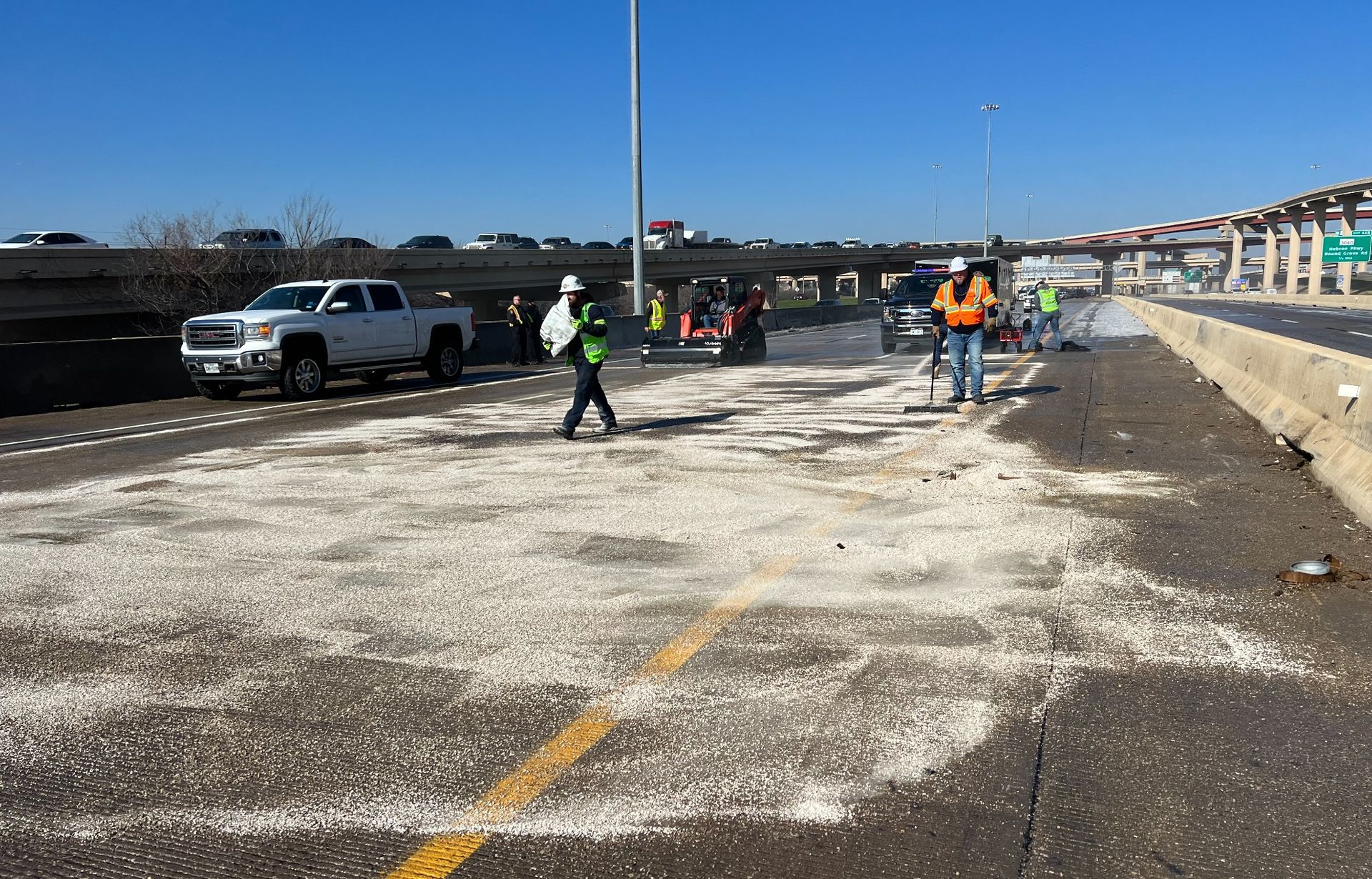
Spill response follows a structured process to keep the scene safe and protect the environment. When a certified crew arrives at a roadway accident, the following steps usually take place:
- Scene Assessment
The crew identifies the type of fluid, the volume of the spill, and the direction of movement. The team also checks for drains, slopes, soil, and other environmental risks. - Immediate Containment
Absorbents, booms, or barriers are placed to stop the spill from traveling farther. This is the most important step in preventing contamination of nearby soil or drainage systems. - Fluid Recovery and Cleanup
Crews remove standing fluids and apply absorbent materials to capture residue. Contaminated materials are collected for compliant disposal. - Surface Cleaning
Pavement or hard surfaces are cleaned to remove the slick film left behind by oil, fuel, or coolant. This step restores safe driving conditions and reduces the chance of follow-up incidents. - Final Verification
The area is inspected to ensure that the hazard has been removed and that no remaining contamination poses a risk to traffic or the environment.
The goal is always the same: contain early, clean thoroughly, and restore the area to safe operating conditions as quickly as possible.
Oil Spills vs Fuel Spills vs Coolant Spills: What Makes Each Cleanup Unique
Although they are all considered vehicle operating fluids, their cleanup requirements differ in important ways.
Oil Spills
Oil adheres strongly to pavement and concrete. It often requires more targeted surface cleaning to prevent slipping hazards. If oil reaches soil at the shoulder of the road, material removal may be necessary.
Fuel Spills
Fuel spreads quickly and can ignite under the right conditions. Cleanups focus on controlling vapors, containing the spread, and collecting product before it enters storm drains.
Coolant Spills
Coolant creates a wide and often nearly invisible slick. Cleanup includes full surface treatment to eliminate slippery conditions and prevent runoff.
Each of these cleanup tracks must be handled by trained technicians who understand the behavior of the specific material and the safety concerns associated with traffic, responders, and the environment.
Common Spill Locations in Denton County
Roadway spills often occur in the same high-traffic or high-stress areas, including:
- Merging zones along I-35E
- Intersections and turn lanes along Loop 288
- Construction areas or work zones
- Heavily traveled industrial corridors
- Access points near logistics hubs and distribution centers
Local familiarity helps spill response teams reach these areas quickly and choose the right containment approach based on previous incident patterns.
Who Should You Call After a Spill?
If a fuel, oil, or coolant spill occurs during a vehicle accident, the first step is always to make sure the scene is safe. If there is any immediate danger to the public, law enforcement or fire services should be contacted.
Once the scene has been secured, a certified hazmat cleanup team should be called to handle environmental cleanup. These teams are trained to work alongside towing companies, incident response officers, and fleet operators.
Haz-Mat Incident Management Provides Fast Oil Spill Response Across Denton County
Haz-Mat Incident Management responds to oil, fuel, and coolant spills throughout Denton County with certified crews and specialized equipment. As a result, teams positioned near Denton, Lewisville, Frisco, and Northlake deploy rapidly to most roadway incidents.
Cleanup services follow all OSHA, DOT, and EPA guidelines, and waste is transported to licensed facilities. Each response focuses on fast containment, thorough cleanup, and safe restoration of the roadway or site.
Request Oil Spill Response or Emergency Cleanup
If you need immediate assistance with a spill caused by a vehicle accident, help is available at any time.