When fuel, oil, or coolant hits the ground, time is the most important factor in determining how severe the incident becomes. Spills on busy Denton County corridors like I-35E, US 380, or Loop 288 can spread quickly, interrupt traffic, create safety hazards, and reach soil or stormwater systems if they are not contained right away. The faster a certified spill response team arrives, the more effectively the site can be secured, cleaned, and brought back to safe operating conditions.
Haz-Mat Incident Management follows a 45-minute response standard for most emergency calls within Denton County. That benchmark reflects how quickly spilled fluids can spread and how important early containment is for safety and environmental protection.
Why the First 45 Minutes Matter
Spills behave differently depending on the surface, the slope of the roadway, and the type of fluid involved. Fuel may evaporate but travel farther. Oil tends to migrate into cracks and seams. Coolant can spread across large areas and create a slick film. Within a short period of time, a small spill can turn into a multi-lane hazard or begin seeping into soil at the road shoulder.
Here is what typically happens if a spill remains uncontained:
| Time After Spill | Likely Impact |
| 0 to 10 minutes | Initial spread begins. Traffic may push fluids farther across lanes. A slip hazard develops. |
| 10 to 25 minutes | Fluids begin reaching seams, sloped pavement, or drainage paths. Spill grows beyond the immediate accident site. |
| 25 to 45 minutes | Risk of environmental contamination increases. Soil absorption or drain entry becomes possible. Cleanup becomes more complex and takes longer. |
| 45+ minutes | Spill may require surface-level remediation. Lane closures last longer, and risk to drivers, responders, and property rises. |
Responding within this window keeps the situation manageable and greatly reduces the chances of long-term environmental impact.
What Happens When a Spill Response Team Arrives Quickly
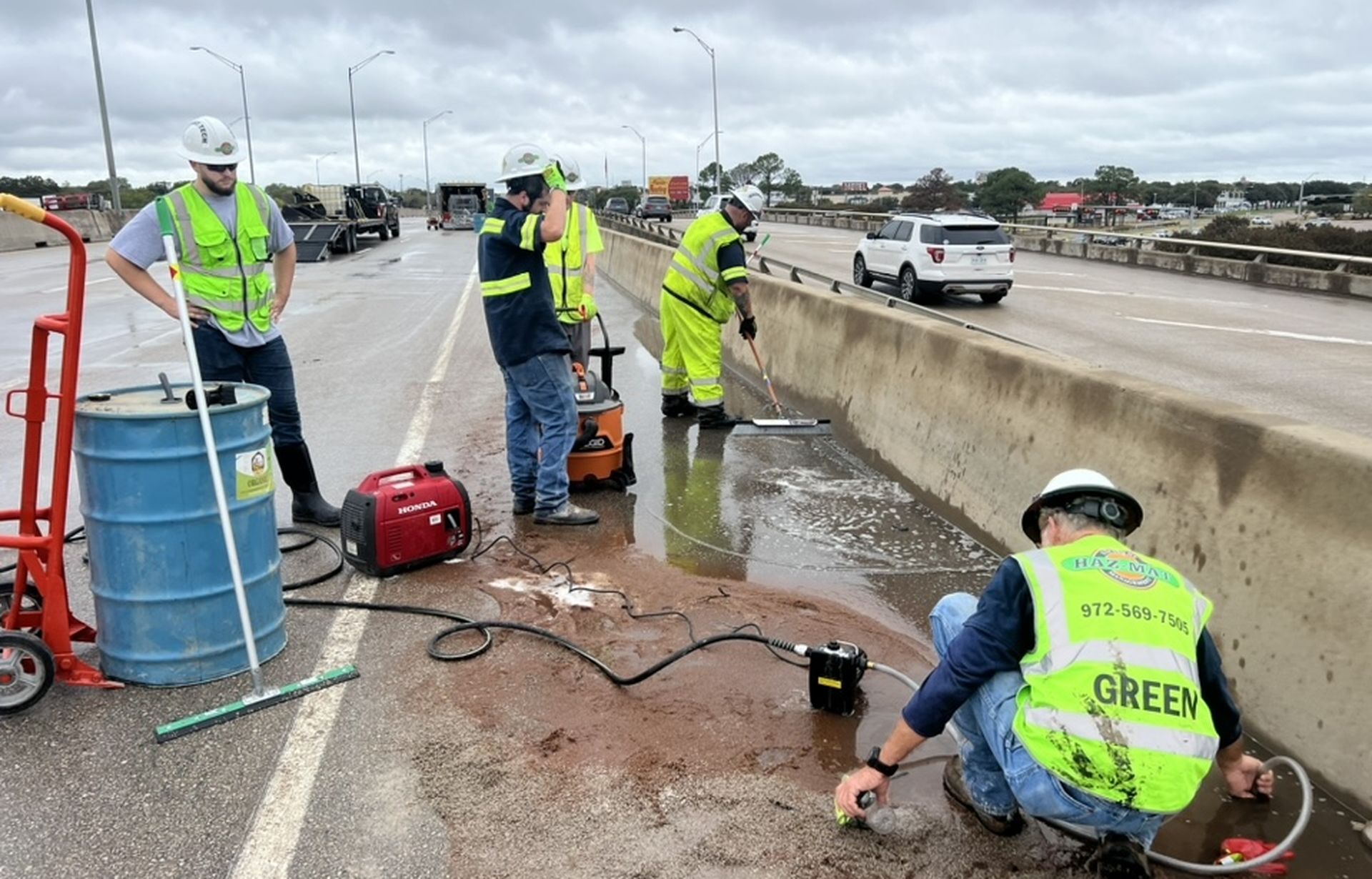
A timely response brings order to a chaotic situation. Once Haz-Mat crews arrive within the 45-minute target, they follow a predictable and effective process:
- Scene Evaluation
The team identifies the type of fluid, the source of the spill, the direction of flow, and any immediate hazards. This determines the best containment approach. - Containment Setup
First, to prevent further spread, absorbents, booms, and neutralizers are deployed during containment setup. Then, as a result, soil, storm drains, and nearby traffic areas are protected from contamination. - Cleanup and Collection
Crews begin recovering fluids, absorbing contaminated materials, and clearing debris. Waste is packaged and prepared for compliant disposal. - Surface Restoration
The area is cleaned to remove residue and restore a safe, non-slippery surface. This allows lanes, parking areas, or facility operations to reopen as soon as possible. - Documentation and Support
Photos, disposal notes, and basic reporting information are completed for regulatory or internal requirements.
This structure ensures that each cleanup meets safety and compliance standards throughout Denton County.
Why a Fast Response Protects the Environment
Fuel, oil, and coolant spills that reach soil or drainage systems can create long-lasting environmental problems. Quick containment reduces the chances that a spill will migrate beyond the pavement. It also minimizes the need for more involved cleanup procedures later.
For example:
- Oil can cling to porous surfaces and enter storm drains if not collected promptly.
- Diesel can soak into gravel shoulders and may require surface material removal if containment is delayed.
- Coolant spreads quickly and can affect vegetation or waterways if it reaches low-lying areas.
Responding early limits each of these risks and keeps the incident within the scope of a standard emergency spill cleanup.
How Fast Response Helps Denton County Drivers, Businesses, and Agencies
A 45-minute response standard benefits many groups across the county:
- Towing companies get lanes reopened sooner and spend less time managing hazardous conditions.
- Trucking and logistics fleets reduce downtime and potential regulatory exposure.
- Municipal teams avoid prolonged traffic disruptions and maintain safer roads.
- Drivers experience fewer secondary accidents caused by slippery surfaces or debris.
Fast action keeps the community safer and lowers the overall impact of an incident.
When You Should Call a Hazmat Team
Contact a certified hazmat team immediately if a spill involves:
- Fuel
- Motor oil
- Coolant
- Hydraulic fluid
- Any mixture of vehicle operating fluids
Spills on public roadways, in parking lots, at distribution centers, or near storm drains should always be handled by trained technicians. If there is any immediate risk to life or property, call 911 first. Once the scene is secured, the environmental cleanup can begin.
Haz-Mat Incident Management Responds Fast Across Denton County
To ensure rapid response, Haz-Mat Incident Management maintains crews throughout Denton County, including Denton, Lewisville, Frisco, Northlake, and nearby cities. Consequently, most emergency calls receive on-site support within 45 minutes, handled by HAZWOPER-certified technicians who follow OSHA, DOT, and EPA cleanup regulations.
If you need immediate spill response, fast action makes all the difference in safety and environmental protection.
Request Emergency Spill Response
For 24/7 assistance, contact Haz-Mat Incident Management. Our certified crews dispatch quickly to contain and clean up fuel, oil, or coolant spills anywhere in Denton County.